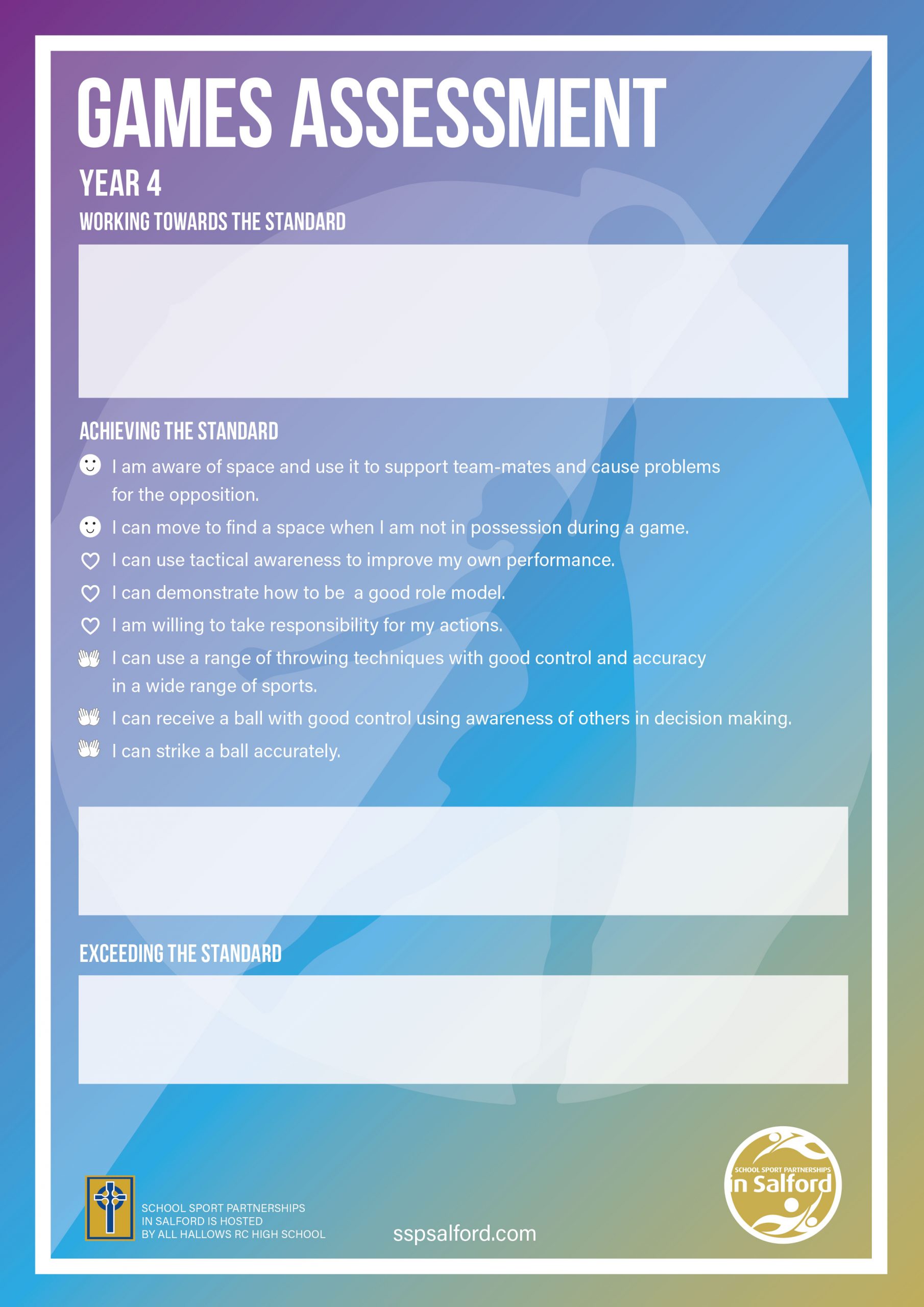
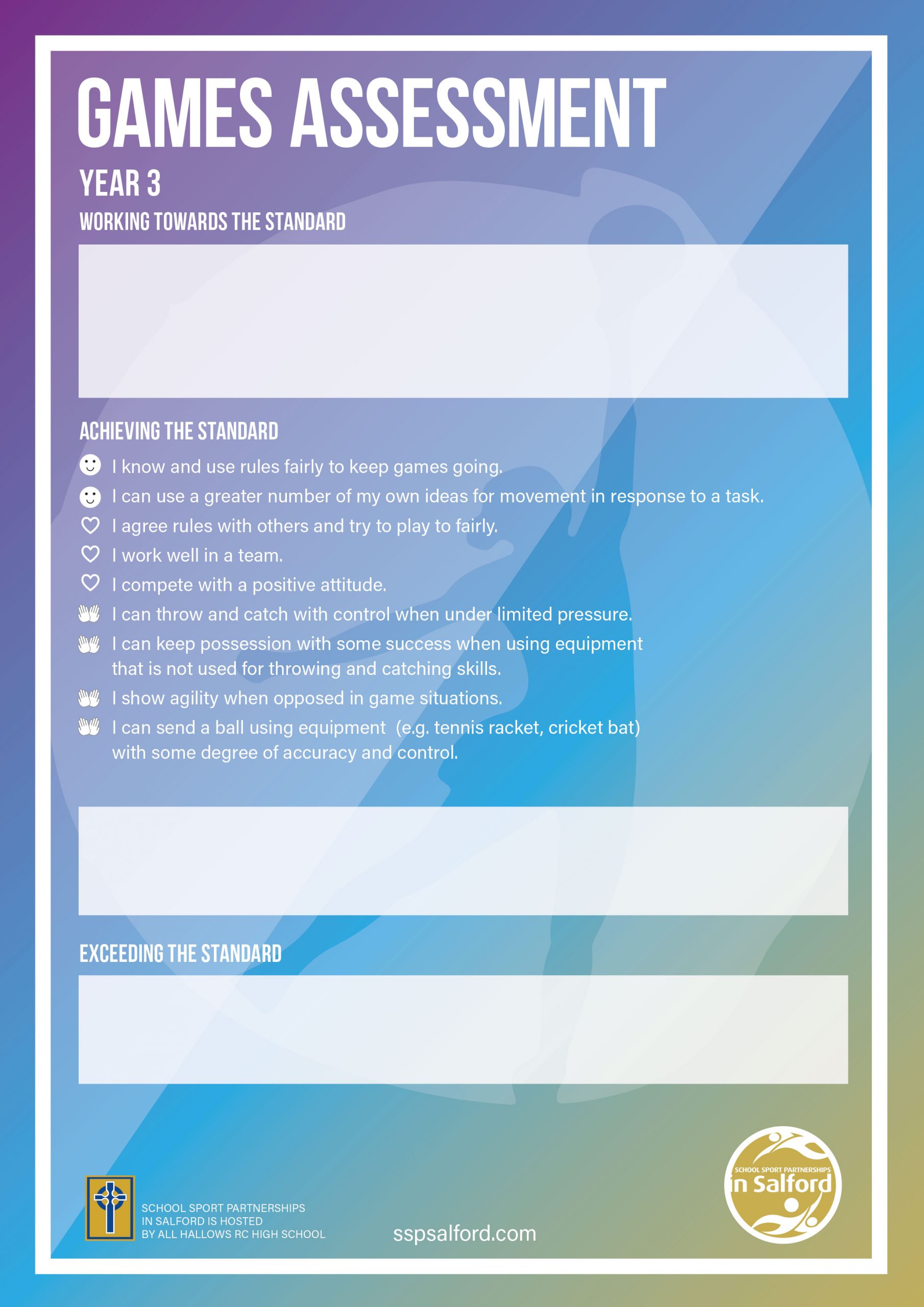
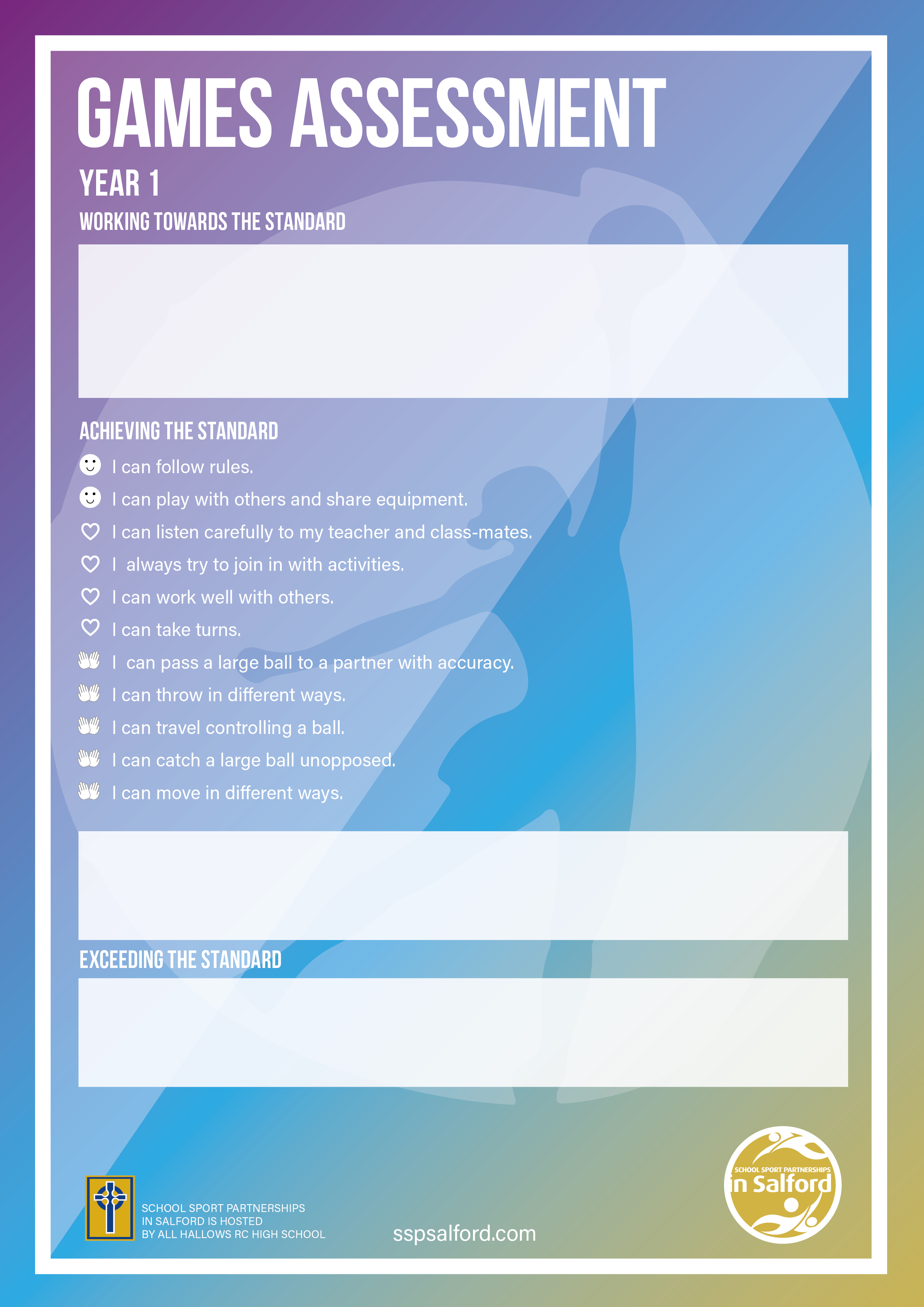
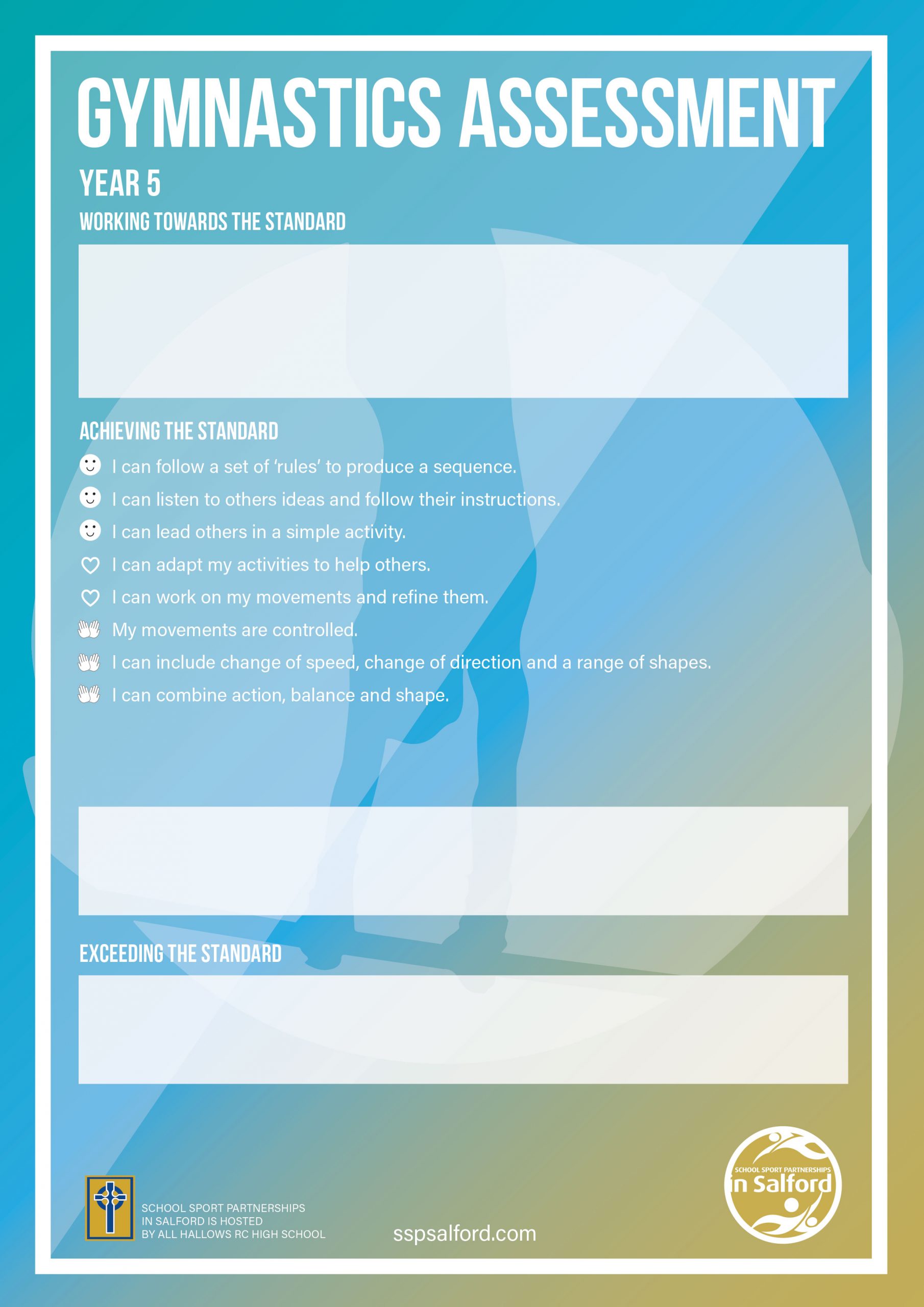
PE Assessment:
Policy and Practice
Reference documents: A Practical Guide to Assessing Without Levels (AfPE) Guidance on Assessment: National Curriculum (2014) (The Physical Education Expert Group)
Assessment Principles
AfPE outline 3 core principles for assessment in PE:
Assessment is to improve pupil progress and attainment against standards, this is assessment FOR learning. This links to the quality of teaching and should provide pupils with feedback to improve learning based on specific and tangible objectives.
Assessment should be clearly aligned with the aims of PE, this is assessment OF learning. This should be meaningful, transferable and demonstrate recognition of pupils who are falling behind and those who are excelling.
Assessment should be an integral component of programme design, this is assessment AS learning.
To make effective use of assessment these 3 core principles need to be embedded within curriculum design and delivery. Assessment needs to use a variety of measures and be an ongoing process which leads to continual improvement and gathers achievement information over time.
The National Curriculum (2014) sets out the aims, purpose of study and content for physical education. Although it does not specify a detailed overview of the nature and content of learning, it presents the expectations that pupils should reach by the end of each key stage. These expectations are considered a minimum entitlement and schools should be encouraged to devise a curriculum programme that is aspirational and is based on the needs of its pupils.
The statements below outline the key attainment targets for each key stage within the physical education programme of study: Key Stage One: Pupils should develop fundamental movement skills, become increasingly competent and confident and access a broad range of opportunities to extend their agility, balance and coordination, individually and with others. They should be able to engage in competitive (both against self and against others) and co-operative physical activities, in a range of increasingly challenging situations
Key Stage Two: Pupils should continue to apply and develop a broader range of skills, learning how to use them in different ways and to link them to make actions and sequences of movement. They should enjoy communicating, collaborating and competing with each other. They should develop an understanding of how to improve in different physical activities and sports and learn how to evaluate and recognise their own success.
Units of work and lesson episodes need to link to the programmes of study for PE with explicit, clear and understandable criteria enabling pupils to understand exactly what is expected of them from each learning activity or assessment task. The nature and method of assessment should be part of the unit design so that deep learning can take place and assessment is not seen to be a separate entity.
Teachers need to consider the key areas of learning and assessment that characterise each key stage (see below). Each key stage identifies the key areas for learning and assessment in physical education, as depicted by the attainment targets in the programme of study.
Primary physical education key areas for assessment Key Stage 1 Develop fundamental movement, Physically motivated and confident, Socially engaged: Fundamental movement skills Agility, balance and coordination Competes with self Competes with others Cooperates with others Physical confidence Can evaluate and recognise success
Primary physical education key areas for assessment Key Stage 2 Applies and develops movement, Effective in working together, Reflective learners:
Apply skills in different ways Link and sequence actions Communicate Collaborate Compete How to improve in sports and activities Evaluate and recognise success
Assessment Strategy Based on the principle of assessment for learning, the methodology should be determined and designed at planning stage and embedded into every lesson. Consideration needs to be given as to: who will be assessed whether assessment will focus on an individual outcome or a combination of outcomes when and how often different methods should be used the purpose of each assessment practice